
By Igbotako Nowinta
“Whether communocracy eventually gains broad acceptance or simply enriches existing governance discourse, one undeniable fact remains: Africa cannot afford to stop asking difficult questions about its political future. True progress has never emerged from intellectual complacency. It is born from courageous ideas, rigorous debate and the willingness to rethink inherited assumptions. Perhaps the time has come for Africa to look inward—not in rejection of the world, but in rediscovering the enduring wisdom embedded in its own history. If democracy is to deliver lasting peace, inclusive development and genuine nation-building across the continent, it may well need an African soul. That, ultimately, is the compelling challenge Professor Cyrille Dalex Ngamen Kouassi has placed before Africa.”
For more than six decades after political independence, Africa has pursued democracy with remarkable enthusiasm. Constitutions have been rewritten, elections conducted, political parties established, and democratic institutions painstakingly built. Yet, across much of the continent, insecurity, poverty, political instability, ethnic tensions and weak governance continue to cast long shadows over the aspirations of millions.
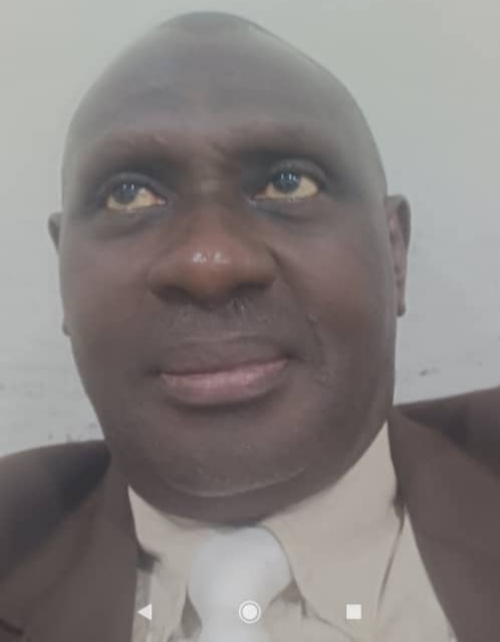
This troubling paradox formed the basis of a thought-provoking intervention by one of Africa’s foremost peace and conflict scholars, Professor Cyrille Dalex Ngamen Kouassi, who has challenged the continent to reconsider its unwavering dependence on Western democratic models and instead embrace an indigenous governance philosophy he describes as “communocracy.”
Speaking at the international conference on Leadership, Democracy and Peace Building in Nigeria, held at Ambrose Alli University, Ekpoma, Edo State, on August 3, 2026, Professor Ngamen Kouassi presented a bold intellectual proposition that has the potential to reshape contemporary conversations on governance across Africa.
The Dean of the School of Postgraduate Studies and Director of the Institute for Peace and Conflict Studies at Glorious Vision University, Ogwa, argued that Africa’s persistent governance crises are not merely failures of leadership but symptoms of a deeper structural problem—the adoption of political systems that are largely disconnected from Africa’s historical experiences, cultural traditions and communal worldview.
His argument deserves serious reflection.
For decades, Africa has largely measured political success through the prism of Western liberal democracy. Multiparty elections, constitutional reforms and periodic transfers of power have become the accepted indicators of democratic progress. Yet, despite these institutional achievements, many African societies remain trapped in recurring cycles of conflict, military interventions, electoral violence, corruption, economic hardship and fragile state institutions.
Professor Ngamen Kouassi insists that this contradiction cannot simply be ignored.
Africa, he notes, is home to over 3,000 ethnic groups, more than 2,000 languages and 55 sovereign states, making it one of the world’s most culturally diverse regions. Such diversity, he argues, requires governance models that emerge organically from African realities rather than systems imported wholesale from different civilisations.
His proposed alternative—communocracy—is rooted in Africa’s traditional communal philosophy, where governance is built around consensus, shared responsibility, collective ownership and the pursuit of the common good.
Far from rejecting democratic principles, communocracy seeks to enrich them by grounding participation, accountability and representation within Africa’s own cultural identity. It draws heavily from the philosophy of Ubuntu—the enduring African belief that “I am because we are”—placing community above excessive individualism and cooperation above confrontation.
In Professor Ngamen Kouassi’s view, the erosion of these indigenous governance traditions has come at a significant cost.
He argues that colonialism not only imposed foreign political institutions but also weakened Africa’s confidence in its own intellectual heritage. The result has been governance systems that often struggle to command legitimacy because they fail to resonate with the social realities of the people they are intended to serve.
His call is therefore not for isolation from the global democratic community but for the “re-decolonisation” of Africa’s political imagination.
It is a call for Africans to rediscover confidence in their own governance traditions while adapting them to contemporary realities.
His lecture also raises difficult but unavoidable questions.
Why do countries that have faithfully adopted democratic constitutions continue to experience prolonged political instability?
Why do electoral processes frequently become flashpoints for violence rather than celebrations of popular sovereignty?
Why has democratic governance not consistently translated into improved living standards for ordinary Africans?
Professor Ngamen Kouassi points to developments in countries such as Libya, Sudan, Mali, Niger, Chad, Cameroon, Nigeria, Tunisia, Algeria, Rwanda and Côte d’Ivoire as reminders that democracy, in its imported form, has not automatically guaranteed peace, stability or development.
Whether one agrees entirely with his conclusions or not, these are questions that demand thoughtful engagement rather than ideological dismissal.
Indeed, one of the greatest strengths of scholarship lies in its willingness to challenge long-held assumptions and stimulate new thinking.
Across the world, successful political systems have evolved from local histories, cultures and traditions. Britain’s constitutional monarchy differs fundamentally from the American presidential model. Switzerland practises direct democracy. China has developed its own governance framework. Scandinavian countries have crafted distinctive social democratic systems.
There is therefore nothing unusual in asking whether Africa, too, should develop governance structures that better reflect its own civilisational values.
This is precisely where Professor Ngamen Kouassi’s intervention assumes continental significance.
His concept of communocracy is not merely an academic exercise; it is an invitation to African policymakers, intellectuals, traditional institutions and civil society to initiate a fresh conversation on what truly constitutes effective governance for African societies in the twenty-first century.
Importantly, communocracy should not be interpreted as a wholesale rejection of democracy. Rather, it represents an attempt to reconcile democratic ideals with indigenous African traditions of consensus-building, social cohesion and communal accountability.
As Africa confronts mounting security threats, youth unemployment, constitutional crises, economic uncertainty and increasing public distrust in political institutions, the search for innovative governance models has become more urgent than ever.
The debate initiated by Professor Ngamen Kouassi therefore arrives at a critical moment.
Whether communocracy eventually gains broad acceptance or simply enriches existing governance discourse, one undeniable fact remains: Africa cannot afford to stop asking difficult questions about its political future.
True progress has never emerged from intellectual complacency. It is born from courageous ideas, rigorous debate and the willingness to rethink inherited assumptions.
Perhaps the time has come for Africa to look inward—not in rejection of the world, but in rediscovering the enduring wisdom embedded in its own history.
If democracy is to deliver lasting peace, inclusive development and genuine nation-building across the continent, it may well need an African soul.
That, ultimately, is the compelling challenge Professor Cyrille Dalex Ngamen Kouassi has placed before Africa.
Nowinta Igbotako, a serial author, social critic, international conflict resolution expert, is Alltimepost.com, (based in Boston Massachusetts, USA) editor@Large, and Executive Director, Nigeria Good Governance Research Centre (NGGRC).