By Igbotako Nowinta
Addis Ababa.
The Africa Network for Environment and Economic Justice (ANEEJ) has taken Nigeria’s campaign for transparent, accountable and development-oriented asset recovery to the global stage, joining leading international experts in Addis Ababa, Ethiopia, for a high-level meeting on the responsible return of recovered assets.
The 5th International Expert Meeting on Asset Return and the 2030 Agenda for Sustainable Development opened on Tuesday, October 6, 2026, at the United Nations Conference Centre in Addis Ababa, bringing together judges, prosecutors, investigators, financial intelligence experts, civil society organisations and international institutions from across the world.
The three-day meeting, which runs from October 6 to 8, is co-hosted by Ethiopia’s Ministry of Justice, the Swiss Federal Department of Foreign Affairs and the United Nations Office on Drugs and Crime (UNODC) under the Addis Process.
At the heart of the meeting is a question that has become increasingly critical in the global fight against corruption: when stolen or illicitly acquired assets are recovered and returned, how can governments ensure that the resources genuinely reach the people and communities from whom they were taken?
For ANEEJ, the answer lies not merely in recovering assets, but in ensuring that restitution is transparent, independently monitored and ultimately translated into tangible public benefit.
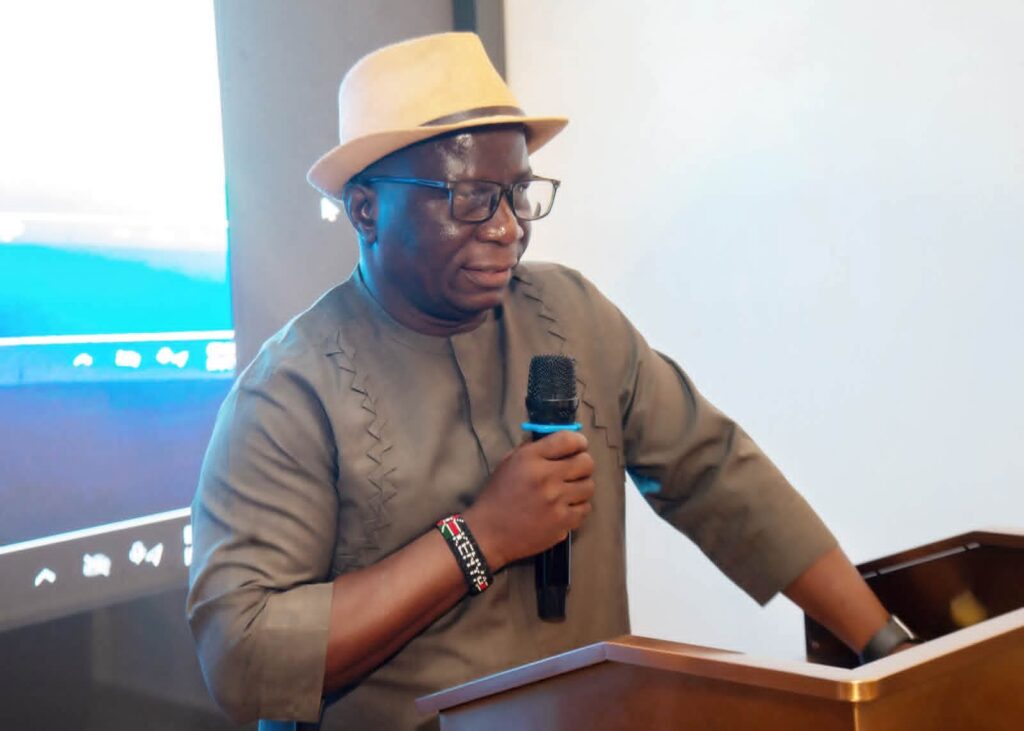
The organisation’s Executive Director, Rev. David Ugolor, is representing ANEEJ at the meeting, where he is expected to bring Nigeria’s practical experience in asset restitution and civil society oversight into the international conversation.
Ugolor will join Selimat Lawal of Nigeria’s Federal Ministry of Justice in presenting lessons from the application of ANEEJ’s MANTRA model to the Bayelsa and Galactica restitution cases.
The presentation, scheduled for Session II on International Cooperation for Asset Return, Sustainable Development and the Involvement of Civil Society, will focus particularly on the procurement of third-party monitoring, implementation challenges and lessons for strengthening independent oversight of returned assets, especially at the subnational level.
The ANEEJ intervention is significant against the backdrop of growing international concern that asset recovery should not end with the repatriation of stolen wealth.
Rather, experts are increasingly advocating mechanisms capable of demonstrating where recovered resources go, how they are spent and whether they ultimately improve the lives of citizens.
Opening the meeting, Ethiopia’s State Minister of Justice, H.E. Cherinet Hordofa, reaffirmed his country’s commitment to strengthening asset recovery and cited Ethiopia’s Asset Recovery Proclamation No. 1364/2025 as part of its efforts to reinforce the legal and institutional framework for recovering illicit assets.
He called for stronger institutions, improved information sharing and faster responses to mutual legal assistance requests, while urging participants to develop practical approaches capable of connecting returned assets with sustainable development and the rule of law.
For Switzerland, responsible restitution must achieve more than the return of money.
Laure-Hélène Lassus-Martin, Head of Switzerland’s Asset Recovery Section, identified three central objectives of responsible restitution: deterring corruption, restoring resources to countries deprived of them and delivering justice to affected populations.
Drawing from Switzerland’s experiences with Uzbekistan and Moldova, she underscored the importance of third-party participation, dedicated accounts and independent monitoring in ensuring that returned assets are properly managed.
She also highlighted the indispensable role of civil society, particularly at a time when shrinking civic space in many countries is making independent oversight increasingly difficult.
The UNODC Chief of Asset Recovery, Shervin Majlessi, similarly stressed the growing importance of asset return within the international development agenda.
According to him, translating recovered assets into meaningful development outcomes requires a combination of technical expertise, political commitment and flexible international cooperation.
He linked effective asset return to the achievement of Sustainable Development Goal 16.4, which seeks to significantly reduce illicit financial and arms flows, strengthen the recovery and return of stolen assets and combat organised crime.
The Addis Ababa meeting is expected to go beyond speeches and declarations, with participants examining a draft template agreement for asset return in support of sustainable development, as well as draft guidelines for international organisations involved in asset returns.
They will also engage in bilateral and multilateral discussions on specific asset-recovery cases and explore practical mechanisms for improving international cooperation.
For Nigeria, the participation of ANEEJ represents an important opportunity to ensure that the voice of civil society is firmly embedded in the international architecture of asset recovery.
Over the years, the organisation has championed transparency, accountability and citizen participation in the management of recovered assets, arguing that repatriated funds should not disappear into opaque government spending systems after painstaking international efforts to recover them.
The ANEEJ contribution in Addis Ababa therefore goes beyond presenting a Nigerian case study. It places Nigeria’s experience within a wider global debate on how recovered wealth can be converted into social value and how citizens can be empowered to monitor the process.
At a time when billions of dollars in illicitly acquired assets continue to cross borders through complex financial networks, the Addis Process offers an important platform for countries and institutions to confront one of the most difficult questions in international anti-corruption efforts: how to ensure that recovered wealth becomes a resource for development rather than another opportunity for abuse.
For ANEEJ, the message is clear—asset recovery should not be measured simply by the amount of money brought back home, but by the transparency of the process, the strength of independent oversight and, ultimately, the difference the recovered resources make in the lives of ordinary citizens.
And from Addis Ababa, Nigeria’s civil society voice is helping to push that message onto the global agenda.