CHUKS OKOH
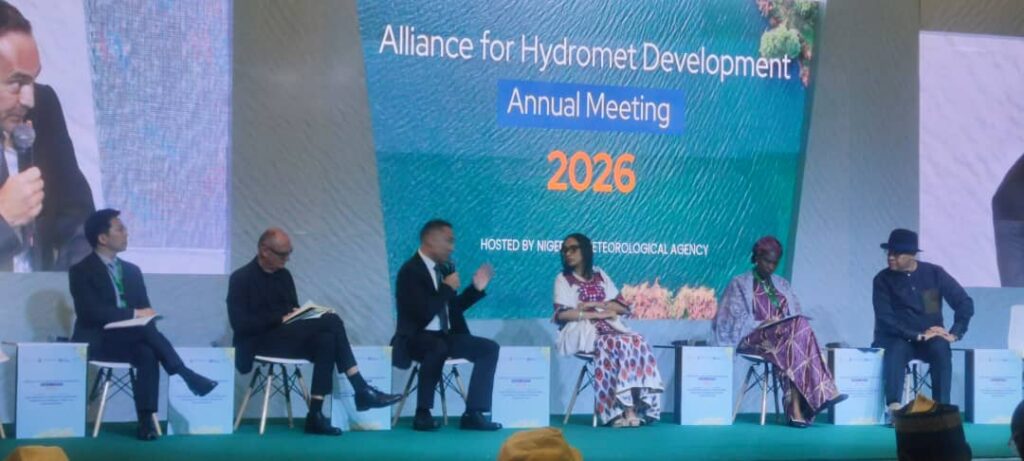
As delegates gather for the 2026 Annual Meeting of the Alliance for Hydromet Development, a stark reality has been brought to the forefront regarding weather data infrastructure across Africa.
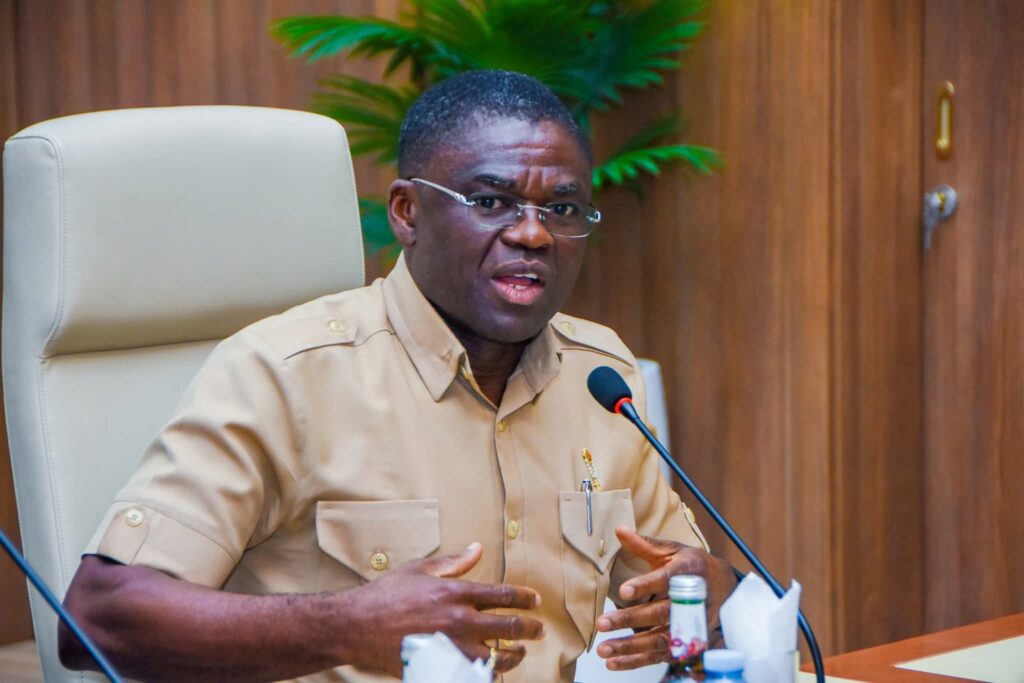
Speaking at the opening ceremony, the Director-General and Chief Executive Officer of the Nigerian Meteorological Agency (NiMet), Professor Charles Anosike, emphasized that Africa currently holds roughly 30% of the global observation deficit, housing the largest basic weather and climate data gaps in the world.
Highlighting the severity of the crisis, Professor Anosike noted that the continent operates on a mere one-eighth, or 12.5 percent, of the minimum weather station density recommended by the World Meteorological Organization (WMO).
Compliance rates across 53 countries linger at a meager 7% for surface land stations and 9% for upper-air stations.
In Nigeria, Professor Anosike pointed out that the scale of vulnerability becomes even more pronounced. Spanning over 900,000 square kilometers of land area, the nation requires at least one standard meteorological station for every 100 square kilometers to satisfy WMO standards.
However, as Anosike explained, due to limited public funding, vast rural, agricultural, and remote border territories remain completely devoid of standard observation stations.
Modernizing these critical weather and climate observation networks requires substantial capital investment that public budgets alone cannot cover.
To bridge this wide infrastructure deficit, Professor Anosike is advocating for government funding to be paired with robust private-sector investment in weather radar infrastructure, remote sensing, analytics, and data platforms.
Professor Anosike urged stakeholders to unite through multiple strategic avenues. Financial institutions, development banks, private capital, philanthropic organizations, and national and regional climate funds are called upon to join forces and commit to investing in weather and climate services.
Furthermore, Anosike emphasized that embracing Public-Private Partnerships (PPPs) will help leverage private-sector capital, efficiency, and risk-sharing alongside government oversight to deliver essential infrastructure. By demonstrating the clear economic value of reliable climate information, from agricultural lending and insurance pricing to infrastructure investment, Anosike stressed that the case for sustained, long-term funding can be significantly strengthened.