
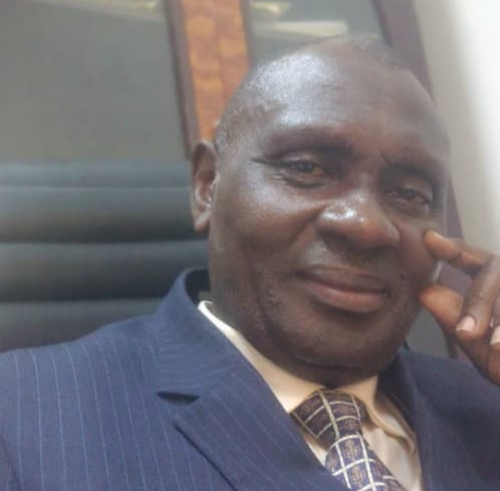
By Igbotako Nowinta
Why a workshop in Agbor may hold the answer to Nigeria’s graduate unemployment crisis
A degree without direction is a debt. That hard truth, which thousands of Nigerian graduates learn too late, was confronted head-on Thursday October 29, 2026, at the University of Delta, (UNIDEL) Agbor.
When the Career Development and Counselling Centre (CDCC) convened its stakeholders workshop on _Building An Integrated University Career Services Ecosystem_ at the NDDC Building, it was not organizing another academic talk-shop. It was declaring war on a national embarrassment: the churning out of unemployable graduates.
For decades, Nigerian universities perfected the art of awarding certificates while the labour market begged for competence. The result is a painful paradox — a country awash with graduates and starved of skills. UNIDEL, under Vice-Chancellor Prof. Eric Eboh, is now saying enough.
“There is no better time than now. UNIDEL is doing what she is supposed to be doing,” Prof. Eboh declared in his keynote address on _The Future of Graduate Employability: Why Universities Need Career Services Centres_, delivered on his behalf by Prof. Benedict Agoha, Acting Dean, Faculty of Social Sciences. “The CDCC is now visible globally.”
That visibility is strategic. Sponsored by TETFund, the workshop assembled the university’s entire command — Registrar Dr. Mrs. Esther Akpojuvie, Bursar Dr. Sunny Ikeogwu, University Librarian Dr. Mrs. Vera Okonoko, deans, heads of departments, directors — to own one idea: employability must be built into the degree, not bolted after it.
Two interventions at the workshop cut to the bone.
First, the TETFund Representative and Acting Dean of Student Affairs, Dr. Chijioke Y. Iyamah, speaking on _Understanding Modern Career Services in Higher Education_, stripped the illusion that universities exist only to set exams. “Students must be prepared for tomorrow. They must be exposed to how to pursue career choices before graduating
Second, Prof. Eboh’s pointed caution to parents: stop forcing courses on children. It is an uncomfortable truth we rarely admit. How many frustrated sociologists wanted to be software engineers? How many unhappy lawyers wanted to be designers? Forced choices breed half-baked graduates, and half-baked graduates breed unemployment.
The CDCC, as outlined by its Director, Dr. Olufunke Chenube, represented by Dr. Ini Imafidon, is offering the antidote — career counselling, psychometric testing, CV clinics, internship pipelines, job linkages and soft-skills labs. Dr. Jude Igborgbor’s paper on Employability Skills Development and Mr. Jude Uwachukwu’s roadmap for institutionalizing career services across faculties show this is not a centre, but a culture.
And that is the real story.
What UNIDEL did on October 29, 2026 is bigger than Agbor. It is a model for Nigeria. If every university had a functional, well-funded, faculty-embedded career centre, we would not have 33-year-old graduates learning how to write a CV after NYSC. We would not have employers spending one year re-training first-class graduates who cannot hold a meeting.
The global standard is clear: Harvard has it, Oxford has it, University of Cape Town has it. No world-class university leaves its students to wander from lecture hall to labour market without a bridge. UNIDEL has started building that bridge.
The interactive session that closed the workshop proved stakeholders got the message. The challenge now is execution — to make CDCC not a poster on a wall, but a compulsory rite of passage for every UNIDEL student from 100 level to final year.
Prof. Eboh has promised management support. TETFund has provided seed support. The staff has shown enthusiasm.
In the end, history will not remember UNIDEL for how many students it graduated, but for how many it made employable. On Thursday, October 29, 2026, it took the boldest step in that direction.
Nowinta Igbotako, a social critic, serial author, is the Executive -Director, Nigeria Good Governance Research Centre (NGGRC)